
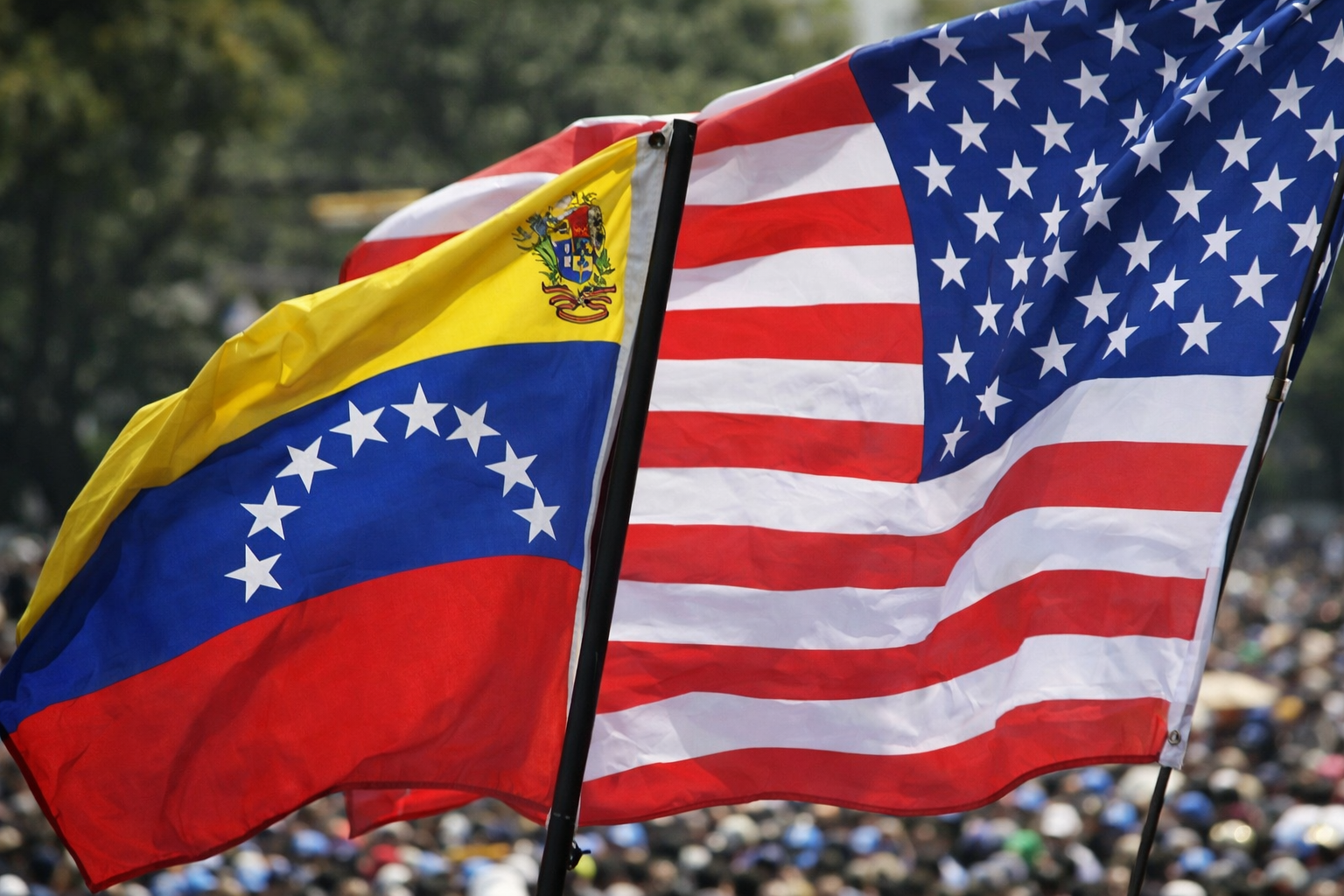
The numbers that define Venezuela’s collapse are almost incomprehensible from the vantage point of the country it once was. Between 2013 and 2025, the Venezuelan economy shed approximately 80% of its GDP — a contraction that dwarfs the United States in the Great Depression (29%), the Soviet collapse, and every peacetime economic disaster in modern history, according to World Bank and IMF data. From a GDP peak of over $460 billion in 2012, the economy shrank to an IMF estimate of $109 billion in 2025. More than 80% of the population lives in poverty. Per-capita income fell from approximately $15,500 to roughly $2,500 today. Over 7 million Venezuelans have fled the country since 2015 — the largest displacement crisis in Latin American history.
The Oil Collapse
Venezuela holds the largest proved oil reserves on the planet. It used to pump 3.5 million barrels per day before Hugo Chávez’s socialist policies took hold. By 2025, production had fallen below 900,000 bpd — a collapse driven by sanctions, lack of investment, corruption, physical deterioration of infrastructure, and the systematic destruction of institutional capacity at PDVSA, the state oil company. Rebuilding to former output levels, Columbia University’s Center on Global Energy Policy estimates, will take “at least 10 years” and require “hundreds of billions of dollars in investment.” American oil firms have so far been reluctant to commit capital to a country where the legal and political framework remains uncertain.
January 3, 2026: The Capture
In the early hours of January 3, 2026, U.S. special forces captured Nicolás Maduro and his wife Cilia Flores in Caracas. Maduro was transferred to New York to face federal drug and weapons trafficking charges. President Trump declared that the U.S. would “run the country” until a proper transition could occur and signaled that U.S. companies would develop Venezuela’s oil reserves. Vice President Delcy Rodríguez assumed acting presidential authority; opposition leader María Corina Machado signaled readiness to lead. Maduro’s former defense minister, Vladimir Padrino López, stepped forward publicly to assert control on the ground.
Oil Market: A Muted Response
Oil markets responded with a shrug — and that response was itself the most important signal. Brent crude slipped to approximately $60 per barrel on the news, while WTI dropped below $58. The explanation is structural: Venezuela produces a heavy, sour crude grade that is not a substitute for light sweet U.S. WTI; China buys roughly 80% of Venezuelan exports (absorbing the geopolitical risk discount); and global oil supply is in a position of surplus, with OPEC+ having been unwinding ~4 million bpd of voluntary cuts through 2025 and the IEA projecting supply could exceed demand by as much as 2 million bpd in 2026. State Street Global Advisors noted the “limited market transmission potential” it had flagged in its 2026 outlook before the event occurred.
The longer-term question is whether Venezuela becomes a post-sanctions Libya (fragmented, unable to attract investment, chronically below-capacity) or a post-sanctions Iran (gradually normalized, capital flooding back). The answer will depend on political stability, the legal framework for foreign investment, U.S. policy continuity, and the willingness of China — which holds billions in Venezuelan debt and controls key refining infrastructure — to accept a reorientation of Venezuelan oil flows toward Western markets. At NPR’s reporting in February 2026, economists were projecting 10–12% GDP growth for Venezuela in 2026 if oil revenues stabilize — but with 270% inflation, wages below $200/month for public servants, and a currency in freefall, that recovery remains deeply precarious for ordinary Venezuelans.
“Venezuela has become a zombie economy — not dead, but not truly alive.” — Asia Times analysis, January 8, 2026
Primary Sources
- Council on Foreign Relations — Assessing Venezuela’s Future After Maduro’s Capture, Jan 3 2026 — cfr.org
- Al Jazeera — Venezuela After Maduro: Oil, Power and the Limits of Intervention, Jan 5 2026 — aljazeera.com
- Kpler — Maduro Captured: Venezuela’s Oil Future at a Crossroads, Jan 5 2026 — kpler.com
- Columbia CGEP — Q&A on US Actions in Venezuela, Jan 5 2026 — energypolicy.columbia.edu
- CNBC — Venezuela Oil Market Analysis, Jan 3 2026 — cnbc.com
- NPR — In Venezuela, Oil Trickles Back but People Still Struggle, Feb 17 2026 — npr.org
- State Street Global Advisors — Venezuela After Maduro: Oil, Global Power, Jan 5 2026 — ssga.com
- IMF / Statista — Annual Inflation Rate Venezuela 1980–2026 — statista.com