
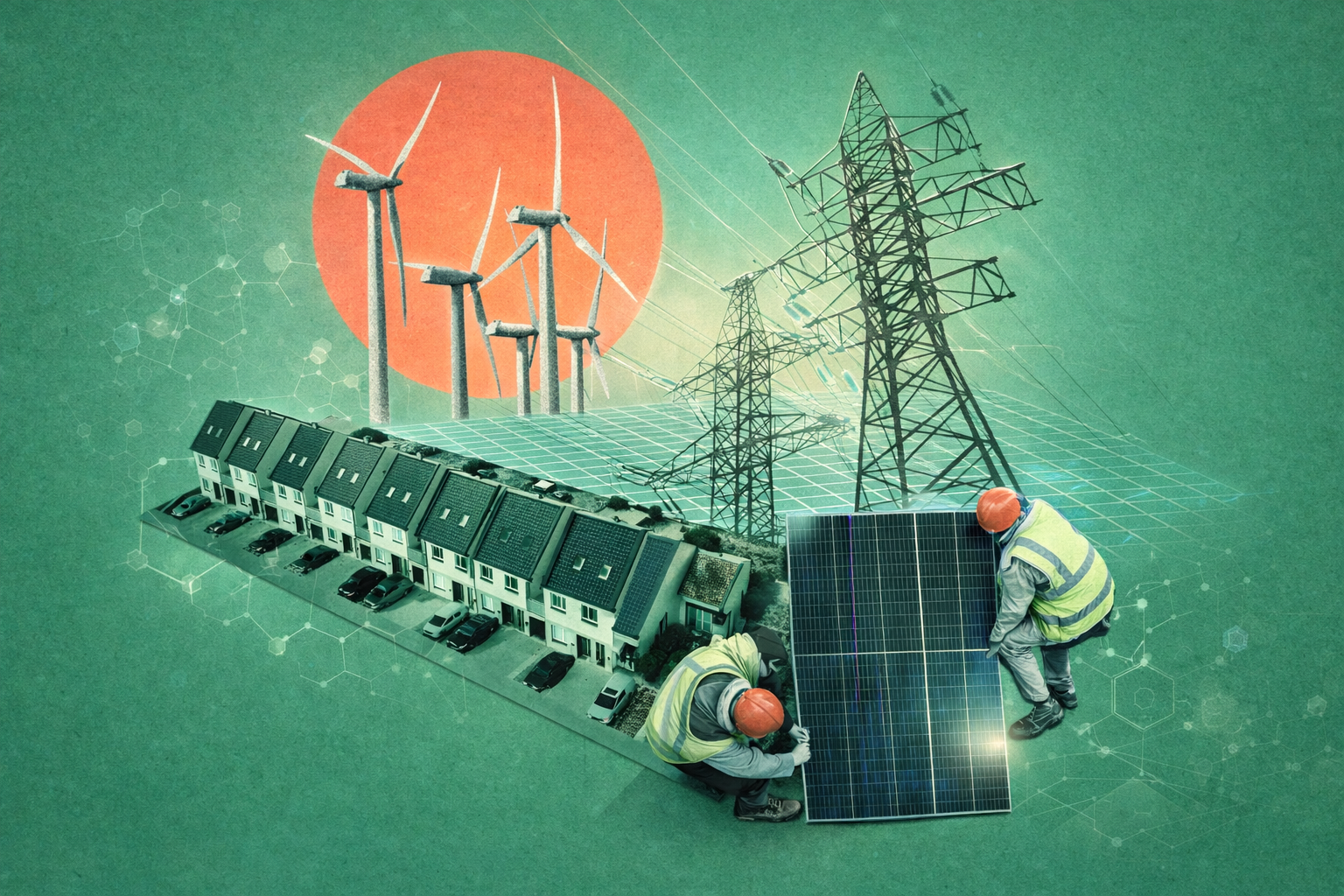
Data centers will double their global electricity consumption by 2030. Gas is being refired. Coal is coming back online in data-center hotspots. And nuclear is being renegotiated as AI’s long-term baseload bet.
For nearly two decades, U.S. electricity demand barely grew. Utilities planned around stability, upgrading infrastructure gradually and operating on the assumption that consumption would remain predictable. That era is ending. The International Energy Agency’s April 2025 Energy and AI report projects global data center electricity use will jump from 415 TWh in 2024 to 945 TWh by 2030 — effectively adding the annual power demand of Japan to the grid in just six years.
This isn’t incremental growth; it’s structural change. AI workloads are continuous, compute-intensive, and scaling fast, turning electricity into the critical constraint. After years of flat demand, utilities now face a new reality: grids must expand, generation must scale, and energy strategy is once again central to economic growth.
The Inference Flip
In the early AI boom of 2020 to 2022, most of the energy went into training, massive one time compute runs inside concentrated data centers, like charging up the engine before launch. But by 2024 to 2025, the story flipped. The real energy draw shifted to inference, the everyday act of millions, now billions, of users asking models questions, generating images, summarizing documents, and embedding AI into daily workflows. Inference now accounts for roughly 60 to 70 percent of AI’s total energy use. ChatGPT alone is estimated to consume around 621 MWh per day. A simple text prompt might use just 0.3 Wh, but longer or multimodal queries can consume 10 to 100 times more. What was once occasional, centralized compute has become a constant, distributed, always on layer of electricity demand, powered one prompt at a time.
“Half of peak electricity demand growth in the United States and Japan over the next five years is expected to come from data centers.”
— IEA Energy and AI, April 2025
Fossil Fuels Are Coming Back Online
The energy transition story is getting more complicated in real time. In Ohio, now a major data center hub, commercial power consumption rose 11 percent in 2025 and coal generation jumped 23 percent. Oklahoma saw coal generation surge 58 percent year over year, largely tied to data center demand. Nationally, U.S. coal generation was up 13 percent, or 64 TWh, through September 2025 according to the U.S. Energy Information Administration. Solar output did grow 29 percent, but it was not enough to offset the surge in fossil generation, leading to a 2 percent rise in power sector CO₂ emissions. The IEA now projects that natural gas and coal will supply more than 40 percent of the additional electricity needed by data centers through 2030, underscoring how AI growth is colliding with climate ambitions.
The Nuclear Bet
Technology companies are not waiting for the grid to catch up. In some cases, they are going directly to the source, signing long term power deals with nuclear operators. Microsoft made headlines with its 20 year agreement to purchase power from the restarted Three Mile Island reactor. Google and Amazon have backed Small Modular Reactor development programs, betting that next generation nuclear will anchor AI’s energy future.
The International Energy Agency projects SMRs will begin coming online around 2030, when nuclear may finally start displacing coal in data center operations. For now, nuclear supplies only about 15 percent of global data center electricity, yet it sits at the center of every hyperscaler’s long term strategy. Meanwhile, the costs ripple outward. Dominion Energy received approval for its first base rate increase since 1992 in Virginia, adding roughly 8.51 dollars per month per household, a visible reminder of who ultimately funds the buildout.
Primary Sources
- IEA — Energy and AI, April 2025 — iea.org
- Pew Research Center — What We Know About Energy Use at U.S. Data Centers, Oct 24 2025 — pewresearch.org
- E&E News / POLITICO — AI Energy Demand by the Numbers, Dec 24 2025 — eenews.net
- Belfer Center, Harvard — AI, Data Centers and the U.S. Electric Grid, Feb 10 2026 — belfercenter.org
- MIT Technology Review — We Did the Math on AI’s Energy Footprint, May 20 2025 — technologyreview.com